
Managing Employee Leave Without Spreadsheets

Managing Employee Leave Without Spreadsheets

Managing employee leave in spreadsheets might work when you have fewer than five staff. However, it doesn’t work for long once your team grows, shifts change, staff work across locations, or payroll deadlines get tight.
Leave management is more than admin
For Australian and New Zealand businesses, leave management is not just an admin task. It affects compliance, rostering, payroll accuracy and staff trust.
In Australia, employers need to understand leave entitlements under the National Employment Standards, including annual leave, personal and carer’s leave, compassionate leave and public holidays. In New Zealand, Employment New Zealand outlines employer responsibilities across annual holidays, sick leave, bereavement leave, public holidays and other leave types.
Spreadsheets are too easy to break
A manager approves leave by email. Another person updates the roster. Payroll uses a different file. Someone forgot to update the balance. By the time payday arrives, no one is fully sure which version is correct. A better leave process starts with one source of truth where you can manage:
Simple staff requests help employees apply for leave without email chains or manual forms.
Manager visibility helps supervisors check balances, coverage and existing absences before approving.
Supporting documents help teams capture medical certificates or notes upfront where required.
One source of truth helps reduce missed updates, duplicate records and payroll confusion.
Leave needs to connect with workforce management
Leave has a direct impact on workforce management workflows. If approved leave does not appear where shifts are planned, managers can accidentally roster someone unavailable or miss a coverage gap until it is too late. For shift-based industries such as hospitality, manufacturing, construction, healthcare, retail and field services, this creates real cost.
Leave needs to connect with expected hours, pay codes and attendance records. The Australian Government business portal notes that employers must understand employee pay, leave and entitlement obligations. In New Zealand, employers must also keep accurate leave and holiday records, including what employees are entitled to and what they have taken, as outlined by Employment New Zealand.
Timecloud connects leave, rosters, attendance and payroll review
That is where Timecloud Leave Management helps. Instead of using spreadsheets, inboxes and manual notes, Timecloud connects leave requests, approvals, rosters, attendance and payroll review in one workflow.
Staff can apply for leave, managers can review requests, and approved leave can flow through to the places it matters. This reduces double handling, missed updates and last-minute payroll corrections.
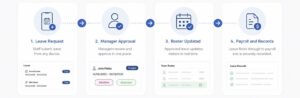
Spreadsheets store fragments. Timecloud manages the workflow.
Spreadsheets do not manage leave. They store fragments of it.
For growing AU and NZ businesses, the goal should be simple: make leave easy for staff to request, easy for managers to approve, visible in rosters, and accurate before payroll.
That is how you move from admin chasing to proper workforce control.
Manage Employee Leave Without Spreadsheets
Timecloud helps AU and NZ businesses capture leave requests, manage approvals, improve roster visibility and reduce payroll corrections.
If your team is still managing leave through spreadsheets, emails or disconnected systems, Timecloud can help bring the process into one connected workflow.