How to Manage Employee Records in New Zealand
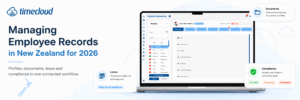
Employee records sit at the centre of good HR management
They affect payroll accuracy, leave compliance, workforce administration, privacy, reporting and how confidently managers can make day-to-day people decisions.
For New Zealand HR teams, the challenge is not just storing documents. The real issue is keeping employee records accurate, secure and connected to the workflows that use them.
Employee records are more than staff files
A proper employee record process should cover more than signed contracts in a shared folder. HR teams need a clear system for managing employment details, agreements, wage and time records, leave records, payroll information, compliance documents, training records, employee communications, onboarding records and offboarding documentation.
In New Zealand, employers must keep accurate wage, time, holiday and leave records for six years, even after an employee has left, according to Employment New Zealand’s record-keeping guidance. IRD also requires employers to keep PAYE records, including wagebook information, PAYE payment details and tax code declarations, as outlined in Inland Revenue’s PAYE record requirements.
Disconnected records create avoidable risk
Many businesses already have the information they need, but it is spread across inboxes, spreadsheets, payroll systems, shared drives and paper forms. That makes it harder to know which record is current, who approved a change, or whether payroll is working from the right information.
Common problems include missing signed agreements, outdated employee details, leave balances that do not match payroll, expired compliance documents, manual timesheet corrections and managers storing important staff information outside the HR system.
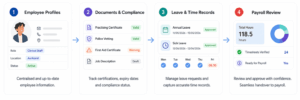
Employee profiles help HR teams keep personal details, roles, locations, managers, employment status, onboarding progress and offboarding details in one place.
Digital documents help store agreements, certificates, policies and supporting records against the right employee.
Leave and time records help connect hours worked, leave taken, approvals and payroll review.
Compliance tracking helps HR teams see missing, expired or role-critical documents before they become a problem.
Privacy needs to be built into HR management
Employee records contain personal information, so access should be controlled carefully. HR teams should know why information is collected, where it is stored, who can see it and how long it needs to be kept.
The Office of the Privacy Commissioner says every New Zealand business or organisation needs a privacy officer. Its guidance on collecting personal information also explains that organisations should be clear about why information is collected, who can access it and how people can request access or correction.
HR software helps turn records into workflows
Modern HR software should do more than store documents. It should help New Zealand HR teams manage employee records as part of daily workforce administration.
That means connecting employee profiles with onboarding, offboarding, leave requests, rosters, timesheets, compliance records, forms, approvals and payroll review. When these workflows are connected, HR teams spend less time chasing missing information and more time managing the workforce properly.
What New Zealand HR teams should review in 2026
A good employee record process should answer simple questions clearly. Where is the current employment agreement? Are leave records up to date? Can payroll see approved hours? Are compliance documents current? Can managers access what they need without seeing sensitive information they do not need?
If those answers rely on one person knowing where things are saved, the process is too fragile. Growing businesses need a central source of truth that supports HR, payroll and operations together.

Manage Employee Records with Timecloud
Timecloud helps New Zealand businesses manage employee information, documents, leave, timesheets, rosters, forms, compliance and payroll-related workflows in one connected platform.
If your HR team is still managing employee records through spreadsheets, shared folders and disconnected systems, Timecloud can help bring your workforce administration into one clearer workflow.
Want to see how connected employee records could work across onboarding, offboarding, leave, timesheets and compliance?