
How Small HR Teams Can Manage Employee Records Without Drowning in Admin

Small HR teams manage everything from recruitment and onboarding to payroll support, compliance and reporting.
Small HR teams manage everything from recruitment and onboarding to payroll support, compliance and reporting. Employee record management sits behind all of these tasks, but it becomes difficult when information is spread across spreadsheets, inboxes and shared folders. The most effective approach is to centralise employee information, standardise how records are maintained and automate repetitive administration.
What are employee records?
Employee records are the documents and information a business keeps about each member of its workforce. These may include:
- Personal and contact details
- Employment agreements
- Job titles and employment status
- Emergency contacts
- Payroll information
- Qualifications, licences and certifications
- Training and leave records
- Policy acknowledgements
- Onboarding and offboarding documents
Some records remain unchanged for long periods. Others, such as contact details, licences and employment status, need regular updates. Employee records management is therefore an ongoing process, not a one-off task.
Why employee record management becomes difficult
Small HR teams usually have limited time and resources. The problem is rarely the number of tasks. It is the way information is stored and managed.
Common issues include:
Small HR teams usually have limited time and resources. The problem is rarely the number of tasks. It is the way information is stored and managed.
Common issues include:
- Multiple versions of the same spreadsheet
- Documents saved under inconsistent file names
- Employee information stored in different systems
- Manual reminders for expiring licences or certifications
- Missing documents that are difficult to identify
- Duplicate data entry across HR and payroll systems
- Sensitive employee data being accessible to the wrong people
- Reports that take hours to prepare
When records are fragmented, simple questions become time-consuming. Finding an employment agreement, checking whether a certification is current or confirming who has completed required training should not require searching through several folders.
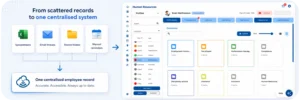
Centralise employee information
A central HR system gives the business one reliable source of employee information.
Each employee should have a consistent profile containing the details and documents required for their role. This may include personal information, employment details, signed agreements, qualifications, training history and compliance records.
Centralising information reduces duplication and makes records easier to find, review and update. It also helps managers and administrators access what they need without relying on one person to locate it.
The goal is not to eliminate every spreadsheet. It is to avoid using spreadsheets as the main system of record for sensitive, changing employee information.
Standardise record-keeping processes
A clear employee records process should define:
- Which documents and details are required
- Who is responsible for collecting and updating them
- Where each record should be stored
- How documents should be named
- Who can access sensitive information
- How often records should be reviewed
- What happens when information is missing
- How records are handled when an employee leaves
Templates and checklists help ensure every employee follows the same process.
For example, all new employees could complete the same onboarding forms, provide the same required documents and follow the same approval steps. This reduces errors.
Automate repetitive HR administration
Automation is most useful when it removes repetitive work without removing human oversight.
Small HR teams should consider automating:
- Onboarding forms and document collection
- Missing information reminders
- Policy acknowledgements
- Certification and licence expiry notifications
- Standard approval workflows
- Employee detail updates
- Routine workforce reporting
Instead of manually emailing each new employee for documents, an onboarding workflow can collect the required information and show what is incomplete. Automated alerts can also notify the right person before a licence or certification expires. These improvements reduce follow-up work.
Protect employee data
Employee records often contain sensitive personal and employment information. Access should be limited according to role and business need.
A strong process should include role-based access, secure document storage, clear ownership of records and regular reviews of who can view or edit employee information.
Businesses should also confirm the employment, privacy and record-keeping requirements that apply in their country and industry. HR software can support these processes, but it does not replace the organisation’s responsibility to manage employee information appropriately.
When should a business move beyond spreadsheets?
A business should consider moving to an HR system when records are stored in several locations, the same information is entered more than once, important dates depend on manual reminders or reporting takes too much time.
It may also be time to change when several people update the same spreadsheets, documents are difficult to find or access to sensitive information is hard to control.
The right system should reduce administration, improve visibility and create more consistent HR processes.
Simplify Employee Record Management With Timecloud
Timecloud helps businesses manage employee information, HR documentation and workforce processes in one connected platform.
If your HR team is still relying on spreadsheets, shared folders and manual follow-ups, Timecloud can help centralise records and reduce administration.